Current Location: Loyangalani (on Lake Turkana), Kenya
Highlights: Watching a cow being bled, a camel milked, and fishing for HUGE Nile perch.
Upcoming: A stick-up by the guy with the AK47, entering Ethiopia and driving up to Addis Ababa, working on the Landy before we leave to south again to visit the different tribes (including the tribe with the lip plates).
We were glad to move from the camping spot with the gale force winds and drove north a short way towards the small town of Loyangalani. This was a fascinating place where several of Kenya's northern tribes all live together, amazingly in peace. These tribes include the Turkana and Samburu people who in other parts fight and steal cattle from each other, and the El Molo which is Kenya's smallest tribe and only lives here on the lake shore.
Their dwellings are traditional small dome shaped stick and grass huts with some people adopting a less traditional mud and stick architecture. As with most villages in Kenya, even the ones way out in the sticks, there is always someone who wants to be your guide and we were approached by a local who claimed to be a guide. I have mixed feelings about the guides. On the one hand they facilitate an interaction with the local people which is often otherwise difficult and they speak the local language, but on the other hand you are then railroaded into only one type of interaction, that of a tourist from whom money is extracted for meeting with these people. This is in stark contrast to the two Samburu warriors we met by chance a few days earlier where our interaction was very different.
We wanted to spend some time out in the bush with some moran (warriors) and their cattle to see our they live in such a harsh environment living mostly on blood and milk form the cattle, as well as to visit the villages of the different tribes. The guide who approached us eagerly said that this was all possible and quite easy to arrange so we negotiated a price and set off in the Landy to find the moran he said were in the bush with their cattle.
After about 30 mins driving we came across one moran and no cattle. Apparently the rest of the moran were either far away, or in the village and that it was not possible to spend some time in the bush. In addition, they were not bleeding the cows at the moment as he said most of the cattle were too weak because it had been so dry and there was little for them to eat.
However, he did say he could bleed a cow if we wanted to see how it was done for a "special fee". So we agreed, and got to see how they bleed a cow which went like this: They selected a strong calf. One person held the animal by the head and wrapped a cord gently around its neck so the jugular vein stood out. Then another fellow took out a bow and arrow. The arrowhead was wrapped in cloth a short distance back from its point which acted as a "stop" so when the arrow was fired into the vein, it would only penetrate enough to puncture the vein not fly into the animals neck. He then took aim and fired, as he did blood squirted form the wound which he quickly captured in a small container made from leather. After a few seconds they closed the wound by rubbing mud over the skin surface and by applying pressure with their hand. One of them then drank the small amount of warn blood straight down! This was pretty amazing to see as it was really a mixture of basic surgery, accurate archery skills, and meal preparation all in one. The rest of the day we spent with a group of school kids in a mission built school house. They were fascinated by us, and were blown away when we showed them the Edventure video on the laptop as this was the first computer they had ever seen.
That night we found another spot by the lake and bushcamped. Before long local people passing by came up to us, some because they were curious, and others because they wanted something. The first two people were two Turkana girls, or women. I am not sure which term to use as they were in their mid-teens and in the USA I might call them girls, but these two both had children and did not act like a typical 14 year old. One women was just curious and the other wanted some something to eat or drink as she had been walking for several days so I made some tea which is very popular, especially if you can offer limitless amounts of sugar to go with it. A bit later three guys from the El Molo tribe passed by and stopped to talk. They all spoke very good English which they had learned in school. We asked many questions about how they live and the local area and before long we had arranged with them to go fishing for Nile Perch and to visit some Turkana tribes people in a distant part of the lake where tourists seldom venture.
In fact this came about because I pointed at a hill in the distance which appeared to be on the other side of the lake and asked what was there. They said that Turkana people live there and that it was not on the other side of the lake but on a peninsular about 20 km north of where we were. So lets go I said so we agreed to meet the next day! By this time it was dark and the wind had whipped up again. We decided to sleep on the ground using the Land's wheels as a wind break. Although it was incredibly windy again, we slept much better.
The three guys from the El Molo tribe showed up on time at 6.30 the next morning and we all squeezed in the Landy, 4 on the front seat and one sat on the front wing and we set off for the hill in the distance. The drive around the lake which was along sand tracks which at times were hard to follow as the only other vehicles that use these tracks were Egos who scouted the area to determine if aid relief was required. After about 20 km, we reached the Turkana village, and a small Island which the El Molo used as a fishing base and where we were going to fish for Nile Perch. We drove the Landy about as far as we could right down to the lake edge with the Island in front. There were two groups of El Molo people one on the Island and another close to where we parked the Landy who had set up fishing camps. They would use little more than a few large tree branches as a boat and go out with nets. Each time they would bring back nets filled with fish, remove the fish, take out the guts being careful to set aside several of the fish organs which could be boiled down to make oil, then cut the fish along the center and leave them to dry in the sun. I am not sure how many days they had been there, but they already had hundreds of dried fish which they would sell. The fishing was obviously fantastic and there was no shortage of fish in this part of the lake. Our goal was to catch a Nile Perk. Apparently Nile Perch can easily grow 8 foot long and are typically huge fish, just take a look at the picture below of some of the bones from a Nile Perch we found by the fisherman. They might look like the back bones from a cow, but no, these are from a monster sized fish! We were both really excited at the prospect of catching one. Our El Molo guides signaled for the guys on the island to fetch us in the boat and we went to a calm side of the island where they used a large lure to fish for the perch.
After about 1 hr we had no bites and the fisherman needed to go back to the mainland so we had to leave disappointed that we didn't bring in a monster size fish. Even something simple like the boat ride back to the mainland was an education. They used a small bucket to bail out water from the boat, then rinsed the bucket in the lake, and half filled it with lake water and drank right from the bucket. They must be immune from the fish smell that permeated from everything. We bought three of the large fish they caught called salmon fish for 20 KSh each (that's about 25 UScents).
Once on the mainland again, we headed back to the Turkana village and met with the village elders. They were happy to let us take pictures and watch them milk the camels in return for some sugar, tobacco, and tea. The elders were very friendly and curious about us. They see few white people but said that they were happy to see white people because they usually make their problems go away. This means that most of the white people they see are relief and aid workers who bring them food which is becoming scarce in the area because of drought. The younger people were quite shy and even frightened of the cameras, but became less shy over time especially when they saw the Polaroid pictures we gave to the elders. Just as the sun was setting we said our good-byes and left the area to head north towards the border with Ethiopia. The tracks were quite hard to find especially in the diminishing light, but with our GPS and QuoVadis Software we were soon on the right track and drove off into the night. The terrain here was barren and bleak, black and gray rocks with the odd acacia tree. After a while we pulled off into a dried up river bed and set up bushcamp under a large flat crowned acacias tree. We decided again to sleep on the ground, this time on
large rocks, to escape from the wind that had already whipped up.
The next morning we were able to see where we camped. It was in a very desolate area, but clearly had signs that people had been there at some point. There were rock structures, animals dung (both camel and goat), and some curious small dome shape rock structures. We had a cup of tea and headed off. Our goal was to reach the northern part of the Sibiloi Park, just before the Ethiopian border. This really was desolate country with virtually no people and roads that were often difficult to follow and certainly no road signs (except two for the park!), so GPS coordinates that we had were worth their weight in gold. All we saw were the odd nomad with a small herd of goats or camels. There was no water for miles so I assume they survived off the blood and milk of the animals. Just before the park we ran into another vehicle, a Dutch couple who had picked up a Swiss guy who was riding his bike down but could not ride this part because there was no water. We exchanged travel info, had a nice chat, then said goodbye.
The rest of the day was just driving through the park through some fairly rough country over sand, rocks, steep banks, and unevenly rutted tracks. We decided to bushcamp just before sunset as we had reached the other side of the park. That night Aaron grilled one of the fish we bought (delicious), and we settled down to what was to be our last windy nights sleep.
We got up early the next day, and continued north to Ethiopia. The last town in Kenya was called Iloret. We stopped off at the Police Station and found probably the most friendly policemen in all of Africa who even shared a beer with us without asking for anything! Since they had water from a well, we got rid of the brackish "soda" water we filled up with in Loyangalani, with this sweet well water and took off for Ethiopia. This really is "out there" Africa where the tracks just go across and into the bush.
To find out what happened later this day, read the RED ALERT diary posting (week 26 I think) and see how we dealt with the guy with the AK47 who got in the Landy and told us to drive!
Showing posts with label Kenya. Show all posts
Showing posts with label Kenya. Show all posts
Sunday, June 15, 2008

Saturday, June 14, 2008
African Adventure: Hello Kenya and the hassle with insurance and visas (April 27-28)
Current Location: Nairobi, Kenya
Highlights: Kenya, Applying for our Sudanese visas.
Upcoming: Safari in the Masai Mara, Island of Lamu, Flamingos on L. Bogoria, and a week in the bush with Masai worriers
Following on from our last thrilling episode, we crossed the Tanzanian border into Kenya, which although reasonably painless was expensive: US$40 for a 30 permit to bring on the vehicle, and US$80 for 60 days insurance. At the border we were harassed by people trying to sell insurance. Our first quote was 4500 KSH (Kenyan shillings = US$64 per month for very basic 3rd party). That's far to expensive I say, but come in, we can give you a discount, they reply. The next quite was 4000 KSH (US$57), but thats still
too expensive, I say, I'm going to shop around. Now remember we are at a border post, there are no shops, and all of the buildings, if you can call them that, are actually just small shacks rarely with brick walls. But there are no other places to buy insurance they say, Oh rubbish, I think, and go in search anyway while people continually try to sell you trinkets or ask to change money. I found another insurance agent and went through an identical ritual with over price in a shack more like a run down shed. As people have seen me walk up and down and ask about insurance, I hear a "pss" and a guy beckons me over. You can get PTA insurance on the Tanzanian side for a cheaper price, he whispers. So I wondered back across the border (unchallenged) and found the PTA insurance office and two men, both asleep with their shoes off and feet up. It turns out that this was "Yellow Card" insurance which we had been looking for and covers us in most south and east African countries. So I bought 60 days insurance for 60 000 TSH (Tanzanian Shillings = US$80). Insurance in hand, we set off for Nairobi.
After a 3 hour drive we arrived in Nairobi, a huge city compared to what we had been used to since South Africa, and found the Upper Hill Camp site where most overlanders tend to stay. Our first job was to apply for a Sudanese VISA. We met another group traveling up to the UK (two South African guys and two Norwegian women, more about these guys later) who had been issued VISAS, but they had told us of another South African guy who had been declined his visas, and remember Toms group, the billionaires group we met in Namibia who was also driving through Africa, well they were also all declined visas for Sudan. Despite a grim outlook, we found the Sudanese Embassy, filled out two forms, and were told to check back on Tuesday. Keep your fingers crossed for us.
We then decided to wonder into town and check out Nairobi as we had not been in a large city for quite some time. While walking past the Hilton Hotel (where I am right now very cheekily using their very fancy Residents Lounge) we were approached by two touts for a Safari Company called Planet Safari. We had been considering taking a safari into the Masai Mara National Park, so went back with them to the sales office. In the end we booked a three day safari into the Masai Mara. Now the cost of the safari verses going by ourselves is as follows: By ourselves with our own vehicle: US$25 each per day to enter the park, and US$10 each per night to camp, plus the cost of food and petrol. With the safari company we bargained them down to US$45 each per day and they would give us three nights free accommodation in their roof-top tented camp (literally tents pitched on the top of a 9 story building in down town Nairobi!) upon our return. We decided to leave on the Safari the next day (Saturday so we would arrive back on Monday, in time to go to the Sudanese Embassy to see if we got our visas on Tuesday).
Sunday, June 8, 2008
Kenya: Samburu, Maasai Mara
Before you leave, think about what to take and what not to take. Keith Waterhouse quotes; Hints to lady travellers in 1889: "It is a great convenience to take one's bath with one". and adds: "A hundred years on there is still a nomadic tribal urge to pack everything, including the kitchen sink". Take as least twice as much film as you think you will need. I will take over 30 rolls of film on a two week safari. Make sure you have spare batteries for your camera;.on one occasion, one of our travelling companion's camera packed up on the second day. He was surprised as he had only had the camera two years! Pack about half what you think you will need. The laundry facilities at all the lodges are very good and very cheap. Take only clothes made from 100% cotton. Most of the lodges have swimming pools so don't forget your swimming costume.
Take a high factor sun screen. Don't forget you are going to Africa from an English winter and so you will be very vulnerable from the sun. You will need a hat which is best bought in Nairobi.
Nine hours flying time from London and you land at Nairobi, my favourite of the African Capital Cities.
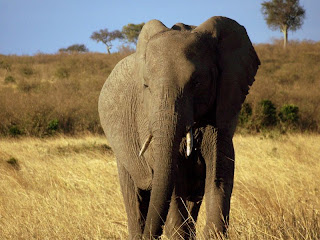
Nairobi is a Maasai word meaning "Place of cool waters". Named for its vast swamps, the city of Nairobi had its origins in the construction of the East African Railway line at the close of the 19th century. Once the railway line reached Nairobi in 1896, it became a railway town, populated by labourers, soldiers and traders. It was the ideal climatic conditions, and the centrality of Nairobi that led to its transformation into a major trading town and two years later, in 1898, the sprawling capital of Kenya was officially established.
The turn of the century saw more white settlers arriving, many of whom settled in Nairobi and the highlands, a few miles outside the city.
In 1920 Kenya became a British Crown Colony. Following the 2nd World War, Kenyans began to agitate for independence from the British Crown. This led to the birth of the Mau Mau movement and, 15 years later, in 1963, the Republic of Kenya was established.
As you leave the airport which is normally pretty early in the morning after a night flight, the first thing you notice is the profusion of bougainvillea along the road. We have stayed at several of the hotels, our favorite is the Serena.
These days, sadly, it is not safe to walk down into the City centre, even during the day, but the Serena has a courtesy bus that is on hand and will take you down and bring you back. It is not safe to walk out at night under any circumstances. During the day If there are four of you you are as safe as you can be. Don't wear expensive jewellery, or have handbags hanging off your shoulder. In fact just be aware that the cameras you may carry and the jewellery you may wear would keep a poor family for a year - or even for a lifetime.
The indoor City Market is well worth a visit and the courtesy bus will drop you right outside the entrance. We always go into the Nation Bookshop which is just beside the New Stanley Hotel, and a great place to browse if you enjoy books. The first year we were in Nairobi I saw a book "Learn to Drive By Pictures". We had already bought several books so decided we would get it another year. We have searched for it ever since and never found it. There is a moral here; if you see something you really like, buy it then and there.
The best time, we think, to go to Kenya on safari is in February. There are several reasons for this. For one thing it is a good time to leave the UK winter behind. It is also the best time to see the animals as there has been no rain for a while and so the undergrowth has died down. If you go just after the long or the short rains the grass is so high that you see little wildlife and they are all hiding in the long grass.
We have been to Kenya a lot and we have usually travelled with a travel company called Kuoni. Kuoni do the best and the most reasonable safaris. Two of the best they do are the Leopard and the Cheetah safaris. Both these safaris are good value and you see a lot of the country and a lot of wildlife.
With most travel companies you are given a couple of days to get acclimatised to the heat Nairobi is 5,000ft above sea level so the temperature is always very pleasant. One of the first things you need to buy is a safari hat.
The very first time Ralph took me to Kenya I woke up in the morning and said to him "I wonder what the weather is doing?" he said "It's a beautiful sunny day." I challenged him on, saying how could he possibly know. But Ralph had been there before and knew that Nairobi is always warm and sunny in February. He was in Kenya with the Royal Army Vet. Corps in the late 1950's
If you are staying in Nairobi for more than a couple of days there are lots of very good tours you can take. You can visit Daphne Sheldrick's elephant orphanage between 12 - 1pm and watch the baby orphan elephants and rhinos having their daily mud bath. We have visited Daphne on several occasions and one of the things that I will never forget is a baby elephant coming up to me, reaching out with his trunk and ever so gently feeling all over my face; quite enchanting. You will probably end up as we did, adopting a baby elephant.
The photographs show Skud the young rhino that Daphne Sheldrick reared. This young rhino was adopted by Arsenal Football Club. Skud grew up and had her own calf. The other picture is of the baby elephants having their mud bath which is essential to young rhinos and elephants to keep their skin in good condition.
Once you leave Nairobi on your safari you start to see the true countryside of Kenya. Your first view of the Rift Valley is quite breathtaking
Your first overnight stop is likely to be one of the tree houses around Mt Kenya. There are three of these lodges. The most famous one is Treetops. This is the lodge that Princess Elizabeth climbed into one night as a princess, and climbed down the next morning a Queen (King George IV had died in the night).
You arrive at the Outspan Hotel where everyone who is going to any of the three tree houses start. If you are lucky you will have lunch here, and on one safari we stayed there overnight.
The Outspan Hotel is at Nyeri and just before you arrive at the hotel you can visit the little church and graveyard in the town. This is the place where Lord Baden Powell and Lady Powell are buried.
It is a lovely place and I loved the sign of Baden Powell's grave which means, to any of us who were girl guides or boy scouts "I have gone home".
Baden Powell lived at the Outspan Hotel for many years and he had a house in the grounds called Paxtu which means "Just Peace." The house still stands in the hotel's beautiful landscaped grounds.
Leaving your case at the Outspan and packing an overnight bag, you leave the Hotel about 3pm. To get to Treetops you pile into a ramshakle old bus and travel 10 miles over fairly rough roads and tracks. When you arrive you leave your vehicle and walk the remaining few hundred yards with an armed guard who has already warned you to be quiet and not to smoke. "The elephants do not like cigarettes". Treetops certainly do things with style. When you arrive in the afternoon there is tea, cucumber sandwiches and scones up on the roof overlooking the waterhole. There are outside spiral steps that take you from floor to floor. One time I was going up the stairs and met a baboon coming down, I don't know who was most surprised but I think it was me.
They have a good system at most lodges, you can arrange to be called if anything unusual comes to the water hole during the night. We tend to sit up quite late watching the water hole, and then get up several times in the night to see what is there.
The other two tree houses are Mountain Lodge which is our favourite and is the lodge where I saw my first wild elephant; that was the sort of special moment that I shall remember all my life. Then there is The Ark where we saw five rhinos around the waterhole on one evening.
Leaving Mount Kenya on your way to Samburu you cross the Equator. This always fun to do, and it is well worth watching the 'Paul Daniels' of the area who demonstrates how water, going down the plughole goes firstly in a clockwise direction, then if you cross the equator line it will go down in an anti clockwise direction; and then, finally, right on the line of the equator the water goes straight down. I really believed this the first time I saw it done. A few years later we watched the same demonstration and I noticed that they had moved the Equator line by about 50ft! And every time we go it seems to be in a different place.
Samburu. This is one of our top favourite lodges in Africa. Here you would be very unlucky not to see at least one leopard. There is a baited tree across the river from the lodge and the leopards come for the meat in the evening. At the lodge there is also a crocodile bar which is also baited with meat every evening Huge crocodiles and monitor lizards come after the meat here. There was a big debate one evening about how long one huge crocodile was; nobody was prepared to go in and measure it! We have even seen a male leopard in that area, also after the meat.
If you are lucky you will see the beautiful genet cat that comes into the dining room on most days We have seen her every time we have been here. When she has young she brings them too. The waiters feed her, but she is not "tame." She sits on top of the doorway that leads into the kitchens.
The lodge has a good swimming pool which is a good place to spend the afternoon before your afternoon game drive.
At Samburu it is very arid and you will see quite a few different animals here. The Grevy's zebra, with its narrow stripes and large ears. The Somali ostrich which has a mauve neck and legs.
The beautiful gerenuk, with its long neck, quite the most beautiful of the antelopes.
And the reticulated giraffe that is quite different from the maasai giraffe that you will see further south.
From Samburu you start to make your way back. There are three soda lakes in the Rift Valley, and on one or other of these lakes the huge colonies of flamingos gather. Your safari driver will know where they are and I'm sure he will take you to one of the lakes so you can see this spectacle.
On your way to the Maasai Mara you will stop for the night somewhere on route. We have stayed at Lake Nakuru, Lake Naivasha and the last time we were in Kenya we stayed at Lake Elementatia Lodge.
Lake Elementatia Lodge was build by Lord Galbraith Cole in 1916. It still retains the features and atmosphere of an early colonial home. The original house houses the hotel's dining and sitting rooms, bar and conference room. We were shown Lord Cole's study where he had drawn pictures of zebra's on the walls.
In the sitting room there are still Lord Cole's books sitting on the bookshelves, which we were able to read if we wished. In 1929, blind in one eye, riddled with pain through arthritis, and spending his days in a wheelchair, Lord Galbrtaith shot himself. Lady Eleanor, his wife, had a monument or obelisk erected by the side of the lake in memory of her husband. Across the lake lived Lord Delamere, greatest of all the pioneering settlers. The thousands of acres across the lake are still in the hands of the Delamere family.
Probably the last park you will visit is the Maasai Mara. The Maasai Mara is quite different from everywhere else. You will see a lot of lion, zebra, hartebeest, buffaloes, ostrich and other plains game here. If you want to go up in a hot air balloon this is the place to do it.
The Maasai Mara is an extension into Kenya of Tanzania's great Serengeti National Park and lies along the border between the two countries. It is 155 miles west of Nairobi and is considered by many people to be the best of Kenya's wildlife sanctuaries. Established in 1961, the Mara covers an area of 695 square miles. In the outer regions of the Reserve the land is shared by the Maasi who graze their cattle alongside the wildlife, and take their chance with the lions. But the area around Keekorok Lodge is treated as a National Park, with no settlements or grazing allowed.
The landscape of the Mara is one of gently rolling savannah grasslands, intersected by the rich acacia woodlands which occupy the banks of the Reserve's two main rivers, the Mara and Talek.
We stay at Keekorok Lodge. I was sitting on our veranda one evening, camera at my side, when the guard who is patrolling all night stopped for a chat. " If you see anything," he said, "do go inside as thereare lion around this evening." Keekorok is open to the African plains. I sat there in the dark and suddenly I saw a movement, there was an animal crossing in front of me, I took a flash picture of it and dived back inside the room. It was only when I got the photographs developed back home that I found I had photographed a hyena.
When the safari vehicles leave to go on a game drive it is a bit like the M25. We tend to ask our driver to go in the opposite direction to everyone else. We may not see quite so much game but it makes for a much nicer game drive. On one of these occasions we were miles from anyway down near the Tanzanian border on a narrow track looking for rhino when we had a puncture. As we got out and stood on the narrow track with the tall grass surrounding us we continued looking very hard for signs of rhino! We did find the rhino but thankfully not until we were back in our vehicle.
After two days spent in the Maasai Mara, the drive back to Nairobi is very long and the roads last time we drove that route were pretty rough. We said that next time we go down to the Mara we will fly back to Nairobi.
Back in Nairobi, you have the choice of leaving for home or going to the coast to relax after your safari. We usually go down to the coast for a few days.
Mombasa, for us, is not somewhere to explore a lot. It is very hot and humid at the coast but at the hotels which are nearly all on the beach there is normally a cooling breeze for most of the day. We spend about five days relaxing at the hotel, swimming, reading and relaxing before going back to Nairobi and flying home to London.
If you have ever wondered if you should go on safari, don't wonder any more. Go. It is the most wonderful holiday you can have. Once you have seen the animals in the place where they should be, you will never again feel the same way about them. You stay in first class lodges that are very comfortable, all with en-suite facilities, and the food is excellent. Have a super safari.
Kwa heri ("Go happy").
Take a high factor sun screen. Don't forget you are going to Africa from an English winter and so you will be very vulnerable from the sun. You will need a hat which is best bought in Nairobi.
Nine hours flying time from London and you land at Nairobi, my favourite of the African Capital Cities.

Nairobi is a Maasai word meaning "Place of cool waters". Named for its vast swamps, the city of Nairobi had its origins in the construction of the East African Railway line at the close of the 19th century. Once the railway line reached Nairobi in 1896, it became a railway town, populated by labourers, soldiers and traders. It was the ideal climatic conditions, and the centrality of Nairobi that led to its transformation into a major trading town and two years later, in 1898, the sprawling capital of Kenya was officially established.
The turn of the century saw more white settlers arriving, many of whom settled in Nairobi and the highlands, a few miles outside the city.
In 1920 Kenya became a British Crown Colony. Following the 2nd World War, Kenyans began to agitate for independence from the British Crown. This led to the birth of the Mau Mau movement and, 15 years later, in 1963, the Republic of Kenya was established.
As you leave the airport which is normally pretty early in the morning after a night flight, the first thing you notice is the profusion of bougainvillea along the road. We have stayed at several of the hotels, our favorite is the Serena.
These days, sadly, it is not safe to walk down into the City centre, even during the day, but the Serena has a courtesy bus that is on hand and will take you down and bring you back. It is not safe to walk out at night under any circumstances. During the day If there are four of you you are as safe as you can be. Don't wear expensive jewellery, or have handbags hanging off your shoulder. In fact just be aware that the cameras you may carry and the jewellery you may wear would keep a poor family for a year - or even for a lifetime.
The indoor City Market is well worth a visit and the courtesy bus will drop you right outside the entrance. We always go into the Nation Bookshop which is just beside the New Stanley Hotel, and a great place to browse if you enjoy books. The first year we were in Nairobi I saw a book "Learn to Drive By Pictures". We had already bought several books so decided we would get it another year. We have searched for it ever since and never found it. There is a moral here; if you see something you really like, buy it then and there.
The best time, we think, to go to Kenya on safari is in February. There are several reasons for this. For one thing it is a good time to leave the UK winter behind. It is also the best time to see the animals as there has been no rain for a while and so the undergrowth has died down. If you go just after the long or the short rains the grass is so high that you see little wildlife and they are all hiding in the long grass.
We have been to Kenya a lot and we have usually travelled with a travel company called Kuoni. Kuoni do the best and the most reasonable safaris. Two of the best they do are the Leopard and the Cheetah safaris. Both these safaris are good value and you see a lot of the country and a lot of wildlife.
With most travel companies you are given a couple of days to get acclimatised to the heat Nairobi is 5,000ft above sea level so the temperature is always very pleasant. One of the first things you need to buy is a safari hat.
The very first time Ralph took me to Kenya I woke up in the morning and said to him "I wonder what the weather is doing?" he said "It's a beautiful sunny day." I challenged him on, saying how could he possibly know. But Ralph had been there before and knew that Nairobi is always warm and sunny in February. He was in Kenya with the Royal Army Vet. Corps in the late 1950's
If you are staying in Nairobi for more than a couple of days there are lots of very good tours you can take. You can visit Daphne Sheldrick's elephant orphanage between 12 - 1pm and watch the baby orphan elephants and rhinos having their daily mud bath. We have visited Daphne on several occasions and one of the things that I will never forget is a baby elephant coming up to me, reaching out with his trunk and ever so gently feeling all over my face; quite enchanting. You will probably end up as we did, adopting a baby elephant.
The photographs show Skud the young rhino that Daphne Sheldrick reared. This young rhino was adopted by Arsenal Football Club. Skud grew up and had her own calf. The other picture is of the baby elephants having their mud bath which is essential to young rhinos and elephants to keep their skin in good condition.
Once you leave Nairobi on your safari you start to see the true countryside of Kenya. Your first view of the Rift Valley is quite breathtaking
Your first overnight stop is likely to be one of the tree houses around Mt Kenya. There are three of these lodges. The most famous one is Treetops. This is the lodge that Princess Elizabeth climbed into one night as a princess, and climbed down the next morning a Queen (King George IV had died in the night).
You arrive at the Outspan Hotel where everyone who is going to any of the three tree houses start. If you are lucky you will have lunch here, and on one safari we stayed there overnight.
The Outspan Hotel is at Nyeri and just before you arrive at the hotel you can visit the little church and graveyard in the town. This is the place where Lord Baden Powell and Lady Powell are buried.
It is a lovely place and I loved the sign of Baden Powell's grave which means, to any of us who were girl guides or boy scouts "I have gone home".
Baden Powell lived at the Outspan Hotel for many years and he had a house in the grounds called Paxtu which means "Just Peace." The house still stands in the hotel's beautiful landscaped grounds.
Leaving your case at the Outspan and packing an overnight bag, you leave the Hotel about 3pm. To get to Treetops you pile into a ramshakle old bus and travel 10 miles over fairly rough roads and tracks. When you arrive you leave your vehicle and walk the remaining few hundred yards with an armed guard who has already warned you to be quiet and not to smoke. "The elephants do not like cigarettes". Treetops certainly do things with style. When you arrive in the afternoon there is tea, cucumber sandwiches and scones up on the roof overlooking the waterhole. There are outside spiral steps that take you from floor to floor. One time I was going up the stairs and met a baboon coming down, I don't know who was most surprised but I think it was me.
They have a good system at most lodges, you can arrange to be called if anything unusual comes to the water hole during the night. We tend to sit up quite late watching the water hole, and then get up several times in the night to see what is there.
The other two tree houses are Mountain Lodge which is our favourite and is the lodge where I saw my first wild elephant; that was the sort of special moment that I shall remember all my life. Then there is The Ark where we saw five rhinos around the waterhole on one evening.
Leaving Mount Kenya on your way to Samburu you cross the Equator. This always fun to do, and it is well worth watching the 'Paul Daniels' of the area who demonstrates how water, going down the plughole goes firstly in a clockwise direction, then if you cross the equator line it will go down in an anti clockwise direction; and then, finally, right on the line of the equator the water goes straight down. I really believed this the first time I saw it done. A few years later we watched the same demonstration and I noticed that they had moved the Equator line by about 50ft! And every time we go it seems to be in a different place.
Samburu. This is one of our top favourite lodges in Africa. Here you would be very unlucky not to see at least one leopard. There is a baited tree across the river from the lodge and the leopards come for the meat in the evening. At the lodge there is also a crocodile bar which is also baited with meat every evening Huge crocodiles and monitor lizards come after the meat here. There was a big debate one evening about how long one huge crocodile was; nobody was prepared to go in and measure it! We have even seen a male leopard in that area, also after the meat.
If you are lucky you will see the beautiful genet cat that comes into the dining room on most days We have seen her every time we have been here. When she has young she brings them too. The waiters feed her, but she is not "tame." She sits on top of the doorway that leads into the kitchens.
The lodge has a good swimming pool which is a good place to spend the afternoon before your afternoon game drive.
At Samburu it is very arid and you will see quite a few different animals here. The Grevy's zebra, with its narrow stripes and large ears. The Somali ostrich which has a mauve neck and legs.
The beautiful gerenuk, with its long neck, quite the most beautiful of the antelopes.
And the reticulated giraffe that is quite different from the maasai giraffe that you will see further south.
From Samburu you start to make your way back. There are three soda lakes in the Rift Valley, and on one or other of these lakes the huge colonies of flamingos gather. Your safari driver will know where they are and I'm sure he will take you to one of the lakes so you can see this spectacle.
On your way to the Maasai Mara you will stop for the night somewhere on route. We have stayed at Lake Nakuru, Lake Naivasha and the last time we were in Kenya we stayed at Lake Elementatia Lodge.
Lake Elementatia Lodge was build by Lord Galbraith Cole in 1916. It still retains the features and atmosphere of an early colonial home. The original house houses the hotel's dining and sitting rooms, bar and conference room. We were shown Lord Cole's study where he had drawn pictures of zebra's on the walls.
In the sitting room there are still Lord Cole's books sitting on the bookshelves, which we were able to read if we wished. In 1929, blind in one eye, riddled with pain through arthritis, and spending his days in a wheelchair, Lord Galbrtaith shot himself. Lady Eleanor, his wife, had a monument or obelisk erected by the side of the lake in memory of her husband. Across the lake lived Lord Delamere, greatest of all the pioneering settlers. The thousands of acres across the lake are still in the hands of the Delamere family.
Probably the last park you will visit is the Maasai Mara. The Maasai Mara is quite different from everywhere else. You will see a lot of lion, zebra, hartebeest, buffaloes, ostrich and other plains game here. If you want to go up in a hot air balloon this is the place to do it.
The Maasai Mara is an extension into Kenya of Tanzania's great Serengeti National Park and lies along the border between the two countries. It is 155 miles west of Nairobi and is considered by many people to be the best of Kenya's wildlife sanctuaries. Established in 1961, the Mara covers an area of 695 square miles. In the outer regions of the Reserve the land is shared by the Maasi who graze their cattle alongside the wildlife, and take their chance with the lions. But the area around Keekorok Lodge is treated as a National Park, with no settlements or grazing allowed.
The landscape of the Mara is one of gently rolling savannah grasslands, intersected by the rich acacia woodlands which occupy the banks of the Reserve's two main rivers, the Mara and Talek.
We stay at Keekorok Lodge. I was sitting on our veranda one evening, camera at my side, when the guard who is patrolling all night stopped for a chat. " If you see anything," he said, "do go inside as thereare lion around this evening." Keekorok is open to the African plains. I sat there in the dark and suddenly I saw a movement, there was an animal crossing in front of me, I took a flash picture of it and dived back inside the room. It was only when I got the photographs developed back home that I found I had photographed a hyena.
When the safari vehicles leave to go on a game drive it is a bit like the M25. We tend to ask our driver to go in the opposite direction to everyone else. We may not see quite so much game but it makes for a much nicer game drive. On one of these occasions we were miles from anyway down near the Tanzanian border on a narrow track looking for rhino when we had a puncture. As we got out and stood on the narrow track with the tall grass surrounding us we continued looking very hard for signs of rhino! We did find the rhino but thankfully not until we were back in our vehicle.
After two days spent in the Maasai Mara, the drive back to Nairobi is very long and the roads last time we drove that route were pretty rough. We said that next time we go down to the Mara we will fly back to Nairobi.
Back in Nairobi, you have the choice of leaving for home or going to the coast to relax after your safari. We usually go down to the coast for a few days.
Mombasa, for us, is not somewhere to explore a lot. It is very hot and humid at the coast but at the hotels which are nearly all on the beach there is normally a cooling breeze for most of the day. We spend about five days relaxing at the hotel, swimming, reading and relaxing before going back to Nairobi and flying home to London.
If you have ever wondered if you should go on safari, don't wonder any more. Go. It is the most wonderful holiday you can have. Once you have seen the animals in the place where they should be, you will never again feel the same way about them. You stay in first class lodges that are very comfortable, all with en-suite facilities, and the food is excellent. Have a super safari.
Kwa heri ("Go happy").
Subscribe to:
Posts (Atom)
